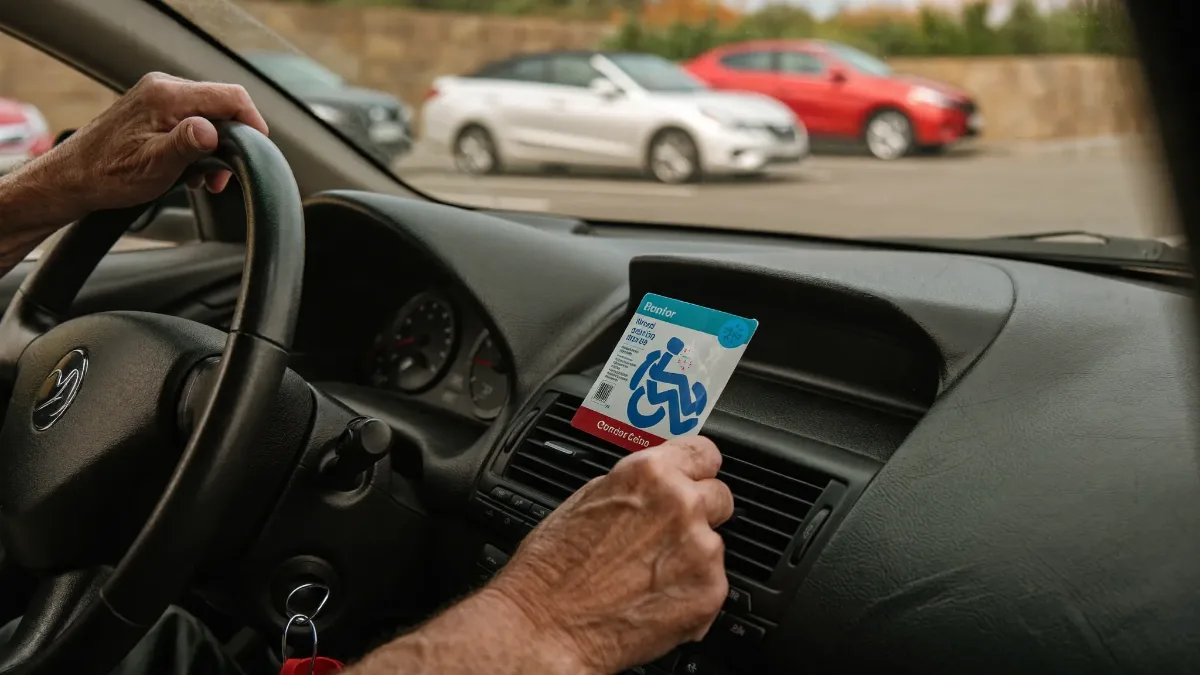
Plenty of people who struggle to walk any distance assume the Blue Badge scheme is not for them. They picture it as something for wheelchair users only, grit their teeth in the far corner of the car park, and never apply.
The rules are wider than that, and they widened further in 2019 when conditions you cannot see from the outside were brought clearly into the scheme.
Who qualifies automatically
You qualify without further assessment if, among other things, you are registered blind or you receive certain disability benefits at the qualifying rates, for example the higher rate mobility component of Disability Living Allowance, or Personal Independence Payment with particular mobility scores.
Who can qualify after an assessment
This is the part people miss. You may still get a badge if you do not receive any benefit at all, but you have a condition that means you cannot walk far without considerable difficulty, severe pain or risk. Councils consider, for example:
- Arthritis, heart or lung conditions that severely limit how far you can walk
- Conditions where walking itself is dangerous to your health
- Non visible conditions, including dementia and severe anxiety conditions, where journeys between a car and a destination cause serious difficulty or risk
- Severe difficulty using both arms, for parking meters and ticket machines
Many older applicants fall into the first group. If walking to the back of a supermarket car park means stopping twice and arriving in pain, that is exactly the situation the assessment route exists for.
Worth knowing before you apply
The badge belongs to the person, not the car. It can be used in any vehicle the badge holder is travelling in, including taxis and a son or daughter's car on the weekly shop. Misuse by other people, such as a relative using the badge while the holder stays at home, is a criminal offence and councils do prosecute.
If your application is refused, you can ask the council to reconsider, and a letter from your GP or consultant describing your walking difficulty in concrete terms often changes the outcome.